+44 (0) 1450 219246
The ethical choice
For immediate release
Students at Highest Risk of Hay Fever – Don’t Let it Drop You a Grade!
Young people are amongst the highest risk group for hay fever, a condition which has been shown to seriously affect exam performance. So what can students do about it? Cambridge University student William Aslet shares his experiences and airborne allergies expert Max Wiseberg provides some useful tips!
The Hay fever – the most common allergy in the UK – is most common in younger people, with nearly 40% of 15 to 25 year-olds suffering from the condition. Studies show that GCSE students with hay fever are 40 per cent more likely to drop a grade between their mocks and final exams, a figure rising to 70 per cent if they are taking sedating antihistamines. [1]
Cambridge University student, William Aslet, comments, “Spring and summer have always been a problem for me. As it coincides with the dreaded exam season, May is always a particularly difficult month – sleepless nights tend not to go well with exam revision or exam performance!”
“A family friend recommended a new allergen barrier balm called HayMax. We liked the idea because it didn’t make you drowsy, didn’t contain any drugs – which would be good for exam time – and was also completely natural. Since then things have improved considerably. I carry the small pot, which lasts me the whole hay fever season, in my pocket, so I can re-apply it when I need it. HayMax has helped me to combat the gruelling ordeal of the high hay fever season, letting me look forward to – rather than fear – the arrival of summer.”
Airborne allergies expert, Max Wiseberg comments, “Exams are stressful enough, without the added worry that you could drop a grade if the weather conditions are against you. So if the weather is warm and sunny – ideal conditions for pollen production – it could mean the difference between pass and fail or achieving a coveted first class degree.
Reducing the amount of pollen getting into your body can reduce or even stop hay fever symptoms. Everyone can tolerate a certain amount without reaction; but once this amount is exceeded – called your trigger level – hay fever symptoms will start to occur. So if you stay below this level, your symptoms won’t be triggered and so won’t affect your exams.
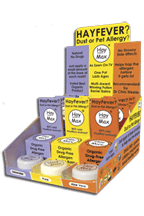
• HayMax organic drug-free allergen barrier balms can be applied to the nostrils and around the bones of the eyes in the morning, throughout the day and at night to trap more than a third of pollen grains, as well as dust and pet allergens, before they enter the body. [2]
• Stay well hydrated and eat lots of fruit and vegetables to stay healthy and support your immune system.
• Going for the hottest curry on the menu can really help – or if you’re making your own, go heavy on the spices. Turmeric, an orange-yellow spice, widely used in curries and South Asian cuisine, is believed to reduce inflammation caused by the enzyme phospholipase A2, which is provoked into action by pollen in your system. And use lots of onions too, as they contain quercetin, a natural anti-histamine, which blocks the effects of histamines.
• Try pizza topped with capers, red onion, watercress and pineapple. Capers, red onions and watercress contain high amounts of quercetin, which can help reduce hay fever symptoms, and pineapple contains bromelain, which helps the body to absorb quercetin.
• You could also try clearing the nasal passages with a saline nasal spray that clears pollen from the nose, to relieve symptoms.
• Colleges and universities can do a lot to help hay fever sufferers, so speak to yours well in advance. Prevailing winds come from the west, so housing the exam in an east-facing hall with the windows closed would definitely help. Ask them to make drinking water readily available to help with dehydration.
• Vacuum your room regularly using a vacuum with a hepa filter, especially beds and fabrics to remove pollen particles. And wash bedding very regularly to remove allergens. Dry your clothes indoors rather than on a clothes line to prevent pollen particles being blown onto the clothes by the outside wind. Keep windows closed to prevent the pollen particles entering your room.
• Wash your face as soon as you get indoors. This will wash away allergens so that they can’t cause a reaction, and a cool compress will soothe sore eyes (this also works well for dust and pet allergies). Shower at night before sleeping to remove pollen particles from your hair and body.
HayMax organic drug-free allergen barrier balms retail at £6.99 per pot and are available from Holland & Barrett; selected Morrisons, Waitrose and Boots; independent chemists, pharmacists and health stores; on 01525 406600 and from haymax.biz.
NOTES TO EDITORS
If writing about HayMax generically, please include the phrase ‘organic allergen barrier balm’.
References
[1] Hayfever and exam performance Study summary, June 2007, ALL/07-009, The Journal of Allergy and Clinical Immunology.
[2] Chief Investigator: Professor Roy Kennedy, Principal Investigator: Louise Robertson, Researcher: Dr Mary Lewis, National Pollen and Aerobiology Research Unit, 1st February 2012.
Full Case Study on William Aslet is available
About Max Wiseberg
Max Wiseberg is an expert in airborne allergies (including hay fever and dust and pet allergies) and is a hay fever sufferer himself. He regularly writes in the press, for publications including The Sunday Mirror, Running Fitness, Health Food Business, The Practicing Midwife, Pharmacy magazines and Your Healthy Living and has appeared on BBC radio, many local radio stations, as well as The Chrissy B Show, Fitness TV and the Holiday & Cruise channel.
ENDS
Students at Highest Risk of Hay Fever – Don’t Let it Drop You a Grade!
Young people are amongst the highest risk group for hay fever, a condition which has been shown to seriously affect exam performance. So what can students do about it? Cambridge University student William Aslet shares his experiences and airborne allergies expert Max Wiseberg provides some useful tips!
The Hay fever – the most common allergy in the UK – is most common in younger people, with nearly 40% of 15 to 25 year-olds suffering from the condition. Studies show that GCSE students with hay fever are 40 per cent more likely to drop a grade between their mocks and final exams, a figure rising to 70 per cent if they are taking sedating antihistamines. [1]
Cambridge University student, William Aslet, comments, “Spring and summer have always been a problem for me. As it coincides with the dreaded exam season, May is always a particularly difficult month – sleepless nights tend not to go well with exam revision or exam performance!”
“A family friend recommended a new allergen barrier balm called HayMax. We liked the idea because it didn’t make you drowsy, didn’t contain any drugs – which would be good for exam time – and was also completely natural. Since then things have improved considerably. I carry the small pot, which lasts me the whole hay fever season, in my pocket, so I can re-apply it when I need it. HayMax has helped me to combat the gruelling ordeal of the high hay fever season, letting me look forward to – rather than fear – the arrival of summer.”
Airborne allergies expert, Max Wiseberg comments, “Exams are stressful enough, without the added worry that you could drop a grade if the weather conditions are against you. So if the weather is warm and sunny – ideal conditions for pollen production – it could mean the difference between pass and fail or achieving a coveted first class degree.
Reducing the amount of pollen getting into your body can reduce or even stop hay fever symptoms. Everyone can tolerate a certain amount without reaction; but once this amount is exceeded – called your trigger level – hay fever symptoms will start to occur. So if you stay below this level, your symptoms won’t be triggered and so won’t affect your exams.
• HayMax organic drug-free allergen barrier balms can be applied to the nostrils and around the bones of the eyes in the morning, throughout the day and at night to trap more than a third of pollen grains, as well as dust and pet allergens, before they enter the body. [2]
• Stay well hydrated and eat lots of fruit and vegetables to stay healthy and support your immune system.
• Going for the hottest curry on the menu can really help – or if you’re making your own, go heavy on the spices. Turmeric, an orange-yellow spice, widely used in curries and South Asian cuisine, is believed to reduce inflammation caused by the enzyme phospholipase A2, which is provoked into action by pollen in your system. And use lots of onions too, as they contain quercetin, a natural anti-histamine, which blocks the effects of histamines.
• Try pizza topped with capers, red onion, watercress and pineapple. Capers, red onions and watercress contain high amounts of quercetin, which can help reduce hay fever symptoms, and pineapple contains bromelain, which helps the body to absorb quercetin.
• You could also try clearing the nasal passages with a saline nasal spray that clears pollen from the nose, to relieve symptoms.
• Colleges and universities can do a lot to help hay fever sufferers, so speak to yours well in advance. Prevailing winds come from the west, so housing the exam in an east-facing hall with the windows closed would definitely help. Ask them to make drinking water readily available to help with dehydration.
• Vacuum your room regularly using a vacuum with a hepa filter, especially beds and fabrics to remove pollen particles. And wash bedding very regularly to remove allergens. Dry your clothes indoors rather than on a clothes line to prevent pollen particles being blown onto the clothes by the outside wind. Keep windows closed to prevent the pollen particles entering your room.
• Wash your face as soon as you get indoors. This will wash away allergens so that they can’t cause a reaction, and a cool compress will soothe sore eyes (this also works well for dust and pet allergies). Shower at night before sleeping to remove pollen particles from your hair and body.
HayMax organic drug-free allergen barrier balms retail at £6.99 per pot and are available from Holland & Barrett; selected Morrisons, Waitrose and Boots; independent chemists, pharmacists and health stores; on 01525 406600 and from haymax.biz.
NOTES TO EDITORS
If writing about HayMax generically, please include the phrase ‘organic allergen barrier balm’.
References
[1] Hayfever and exam performance Study summary, June 2007, ALL/07-009, The Journal of Allergy and Clinical Immunology.
[2] Chief Investigator: Professor Roy Kennedy, Principal Investigator: Louise Robertson, Researcher: Dr Mary Lewis, National Pollen and Aerobiology Research Unit, 1st February 2012.
Full Case Study on William Aslet is available
About Max Wiseberg
Max Wiseberg is an expert in airborne allergies (including hay fever and dust and pet allergies) and is a hay fever sufferer himself. He regularly writes in the press, for publications including The Sunday Mirror, Running Fitness, Health Food Business, The Practicing Midwife, Pharmacy magazines and Your Healthy Living and has appeared on BBC radio, many local radio stations, as well as The Chrissy B Show, Fitness TV and the Holiday & Cruise channel.
ENDS


PR Newsroom - Organic, Drug-free Pollen Barrier Balm, HayMax
Further information
For interview requests with Max Wiseberg or images, or for more information about HayMax allergen barrier balms, please contact:
Ian & Jenny Liddle, Excellart, 01450 219 246,
info@excellart.co.uk, www.facebook.com/Excellart, www.twitter.com/excellart
For interview requests with Max Wiseberg or images, or for more information about HayMax allergen barrier balms, please contact:
Ian & Jenny Liddle, Excellart, 01450 219 246,
info@excellart.co.uk, www.facebook.com/Excellart, www.twitter.com/excellart

Previous Release

Next Release